Supper Club: Metamorphosis
The lights are dim, jazz floats through the air, and a suit-clad Leo pledge is guiding you to one of eight chairs surrounding an elegantly decorated dining table. There are candles, botanical arrangements, spherical ice cubes… this is some high quality stuff. Welcome to The Supper Club, a student-led fine dining experience.
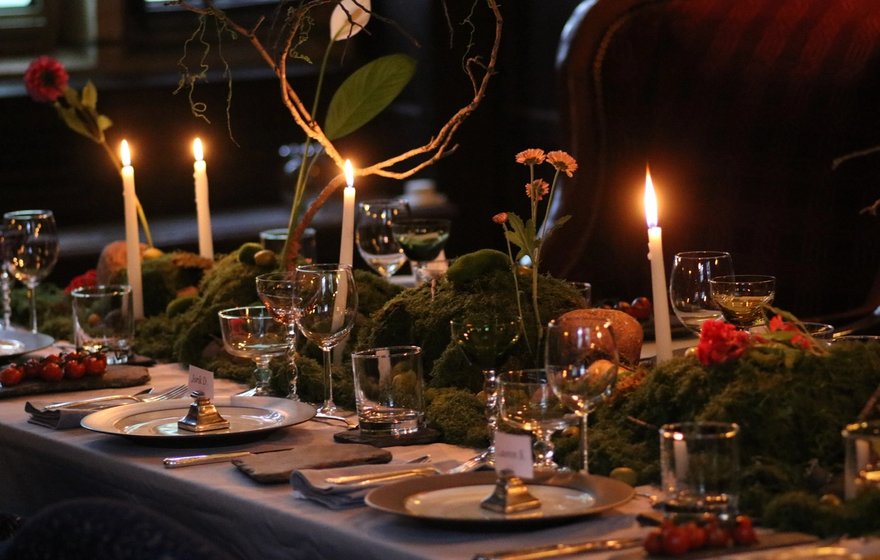
The lights are dim, jazz floats through the air, and a suit-clad Leo pledge is guiding you to one of eight chairs surrounding an elegantly decorated dining table. There are candles, botanical arrangements, spherical ice cubes… this is some high quality stuff. Welcome to The Supper Club, a student-led fine dining experience.
Juniors Eli Breyer and Amelia Wyler started the Supper Club just last spring. They wanted to deliver inventive, concept-driven dining experiences to small groups of adventurous diners. From the moment we walked in, it was clear that this was an elaborately planned, carefully curated experience. We had high hopes.
Over the course of the evening, chef Eli, chef Amelia, and the LEO pledges guided us through what they described more than once as an “experimental” menu. The concept of “metamorphosis,” and more specifically the Greco-Roman myths narrated in Ovid’s Metamorphoses, inspired each of the six courses, as well as the dining experience itself.
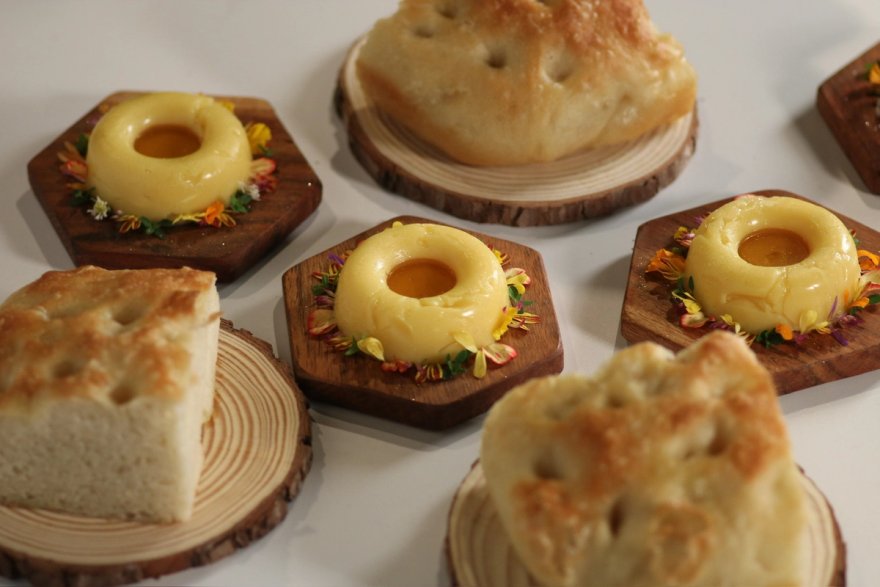
After sitting down, we were served a hefty wedge of focaccia. It was paired with a ring of flower-adorned honey butter and a vine of roasted cherry tomatoes. The focaccia was fluffy, the butter was sweet and creamy, and the tomatoes were explosively sweet. This was an exciting and delicious start to the meal that even further amplified our excitement for subsequent courses.
The second appetizer was inspired by the myth of King Midas. After doing a favor for the god Dionysis, the king was granted one wish. Greedily, he wished for everything he touched to turn to gold. But what was at first an incredible gift quickly became his demise; when he put food to his lips, it became inedible metal, and when he drank water, his throat became coated in solid gold.
Named “Midas’ Touch,” the dish was served in a heavy, stone-colored ceramic bowl. It consisted of a smooth pomme purée made jet black by charred onions and garnished with a crispy tuile. To embody his “touch,” we were given a pipette whose contents, a glittering, gold liquid, we were supposed to squeeze over the pomme. Its shiny gold color cut through the darkness of the rest of the dish creating what looked like a shimmering pool of liquid gold. Even though the dish was gorgeous and creative, the flavors themselves weren’t particularly memorable; the flavor of the charred onion wasn’t particularly noticeable, and it tasted more like a classic bowl of mashed potatoes than anything else.
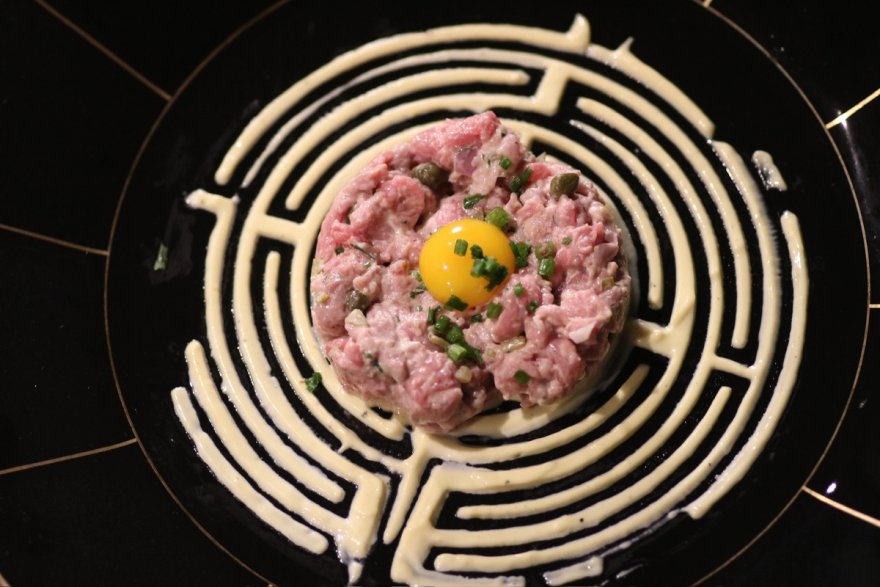
The next dish was a beef tartare inspired by the Minotaur, the tragic, half-man half-bull trapped in Daedelus’s labyrinth who feeds on human flesh. The tartare was rich and texturally satisfying and the presentation was spectacular. It consisted of high quality beef sirloin, creamy aioli, green onion, and a raw quail egg yolk. Neatly centered on the plate, it was surrounded by an aioli labyrinth pattern that was so precise and elegant I thought it was part of the plate. This was my favorite dish of the night, in terms of both presentation and flavor. However, only one moderately-sized plate of tartare was served to be split between every two diners, a choice we found confusing considering the dinner’s $75 price tag.
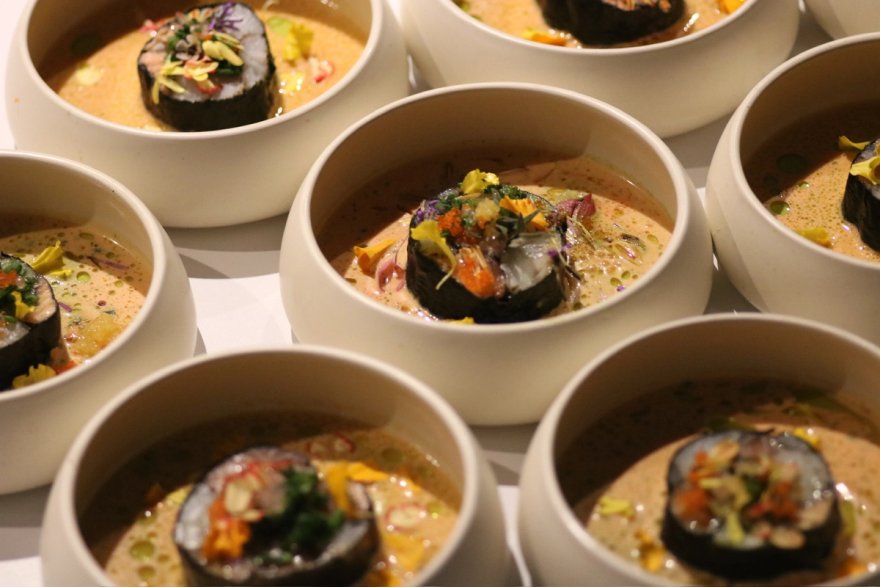
The fourth course was inspired by Glaucus, the ocean deity turned into a multi-tentacled sea monster after rejecting the sorceress Circe. This was the first seafood dish of the night: monkfish, frozen passionfruit, fermented beurre monte, and chive oil came together to form one of the prettiest dishes of the night. Before we ate, though, the waiters and chefs brought out an enormous container of liquid nitrogen and dipped tiny delicate pea shoots in — one for each diner. The shoot froze within seconds, becoming crispy and tangy. It was a lovely complement to the savory fish.
Medusa inspired the final savory dish of the night. Each component of the dish was related to Medusa’s serpentine hair. the tentacles of a squid, the snake-like shape of spaghetti). It didn’t stop there, however; at the end of his explanation of the dish, Eli revealed that the dish also had actual python meat inside of it. Purchased from an exotic meat farm in Texas, dehydrated python had been frozen and grated into the pasta’s beurre blanc sauce. Although it was cool in concept and contributive to Eli and Amelia’s goal of exposing diners to novel things, the dish tasted like nothing but slightly elevated butter pasta. This begs the question: to what extent is a component of a dish worth including if its contribution to the diners’ experience is only conceptual?
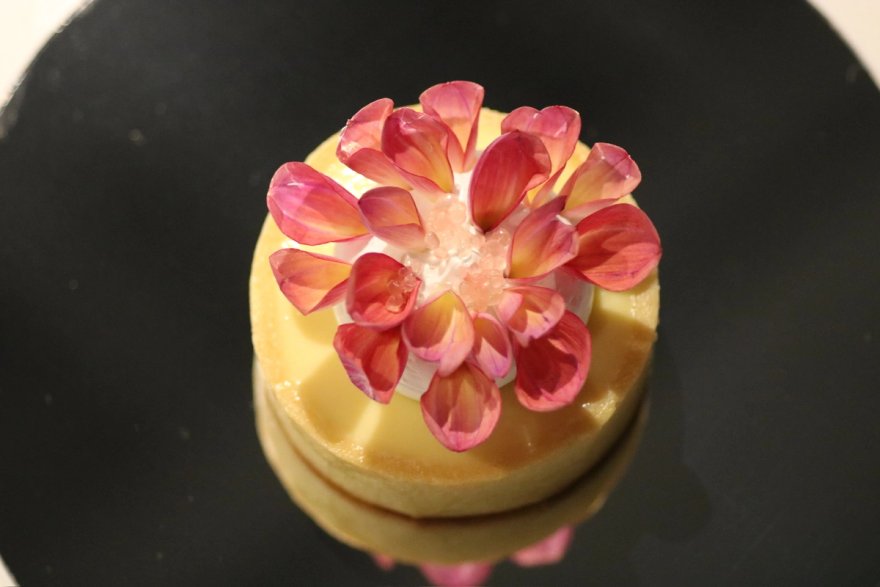
Finally, a Leo pledge described the myth of Narcissus: a man who, upon looking into a spring, fell in love with his own reflection. Eventually, he wasted away, and all but a flower was left in his place. A dessert inspired by this myth arrived: served on a mirror to mimic Narcissus’s reflection, it was a lemon tart with meringue and edible wildflowers, to call back to what remained of Narcissus’s body.
As dessert arrived, we were promised a final, ultimate surprise. Waiters handed out small, triangular envelopes to each diner, and we were instructed to open them, carefully, together. Peeling back the paper, one could make out just a hint of orange: a wing. Then, a leg; a body. Tucked inside each envelope was a live butterfly–the embodiment of metamorphosis. Within minutes, there were butterflies in abundance: perched on the tables, floating overhead, landing on chairs. It was a surreal experience and an astonishing complement to our final course.
Supper Club founders Eli and Amelia have nurtured the concept of something like this for a while. Long before coming to Yale, they both had a love for food and cooking; in fact, before they even met, Eli was working at a restaurant in Paris just five minutes away from Amelia, who was attending a culinary school program during her gap year. After becoming friends through Saybrook in freshman year, they bonded and quickly began cooking together and for their friends.
Although there were already culinary clubs on campus, they found that none of them gave members the opportunity to dive deep into the experimental and conceptual aspects of cooking. Amelia felt that the structure of Popup, Yale’s most popular cooking club that serves 80+ diners per opening, did not grant chefs the opportunity to spend meaningful time experimenting with food and the creative concepts behind it. Many of Popup’s time and resources are allocated to efficiently producing almost a hundred plates of five or six dishes. They asked the question: what happens when you spend those resources into creative experimentation with the food, serving an intimate group of only eight diners?
Just last spring, Eli and Amelia decided to start the Supper Club to explore that question. They wanted to create unique dishes they could get excited about and share that excitement with diners. By pushing the boundaries of food and introducing diners to ingredients they’ve never tried before (like python meat), they aim to create exciting and memorable experiences.
With such ambition, however, comes many challenges. In order to source python meat, purchase dozens of living butterflies, and cook and plate six edible dishes, they call on a team of friends who each hold robust positions, and without whom the dinners wouldn’t be possible. We had the privilege of talking with one of the chefs, Eli Breyer Essiam, about the process and the ideas behind the meal. Eli discussed the challenging process of creating an ambitious dish: it has to be something conceptually relevant to the theme; something that tastes good; something he, Amelia, and their team are excited to create; something that will excite people and something that is cohesive with the rest of the tasting menu. Planning starts an entire month in advance; not only do the logistics have to be worked out, but they also have to go through many different conceptual iterations of their dishes to find a way to satisfy those requirements.
The conceptual intentions were not lost on us. We left the room with full bellies, but perhaps more importantly, full minds. The Supper Club made us consider the link between food and storytelling–between myth and meal. Food can be so much more than something to eat, it can be an art form where chefs translate conceptual thinking into edible objects. It felt like a truly Yale experience to see students combining academic intrigue with high-quality craftsmanship and production value that far exceeded any expectations of a “student project”. If anything, it made us consider just how much planning, effort and creativity goes into creating any restaurant experience–even more so a fine dining one.
Food aside, it was exciting to experience this nearly three-hour meal with six complete strangers. Furthermore, these people we would have otherwise never met — people from other years, other rescos, other countries. Conversations ranged from Letterboxd top fours to the merits of Japanese cuisine to the nature of obsession in art. It felt almost as much a social club as a Supper Club. The shared experiences of dipping pea shoots in liquid nitrogen or watching butterflies crawl out of envelopes is sure to stoke some group bonding. One aspect of Supper Club’s mission is to bring strangers together through food, and we can attest that it does so with great success.
Keep reading
All stories →
First ARAY Pop-up of the Year! All Around Asia
Nine dishes, seven countries, one student kitchen.
Trumbull Breakfast
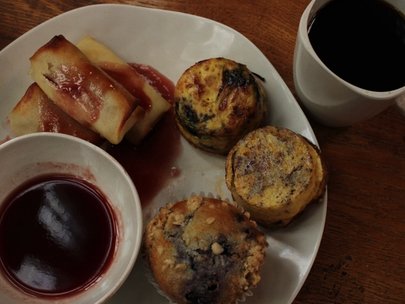
So, if you enjoy a savory breakfast and one less decision to make in your day, I hope to see you at Trumbull.
Talking To Ya About Taktoukah
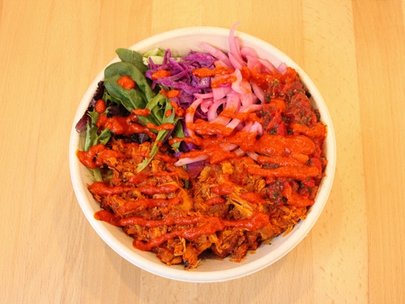
Inevitably, everyone asked the employees what to order. They all receive the same answer: the Hot Harissa Chicken, either in bowl or in sandwich form. So naturally, I joined along and purchased the Hot Harissa Chicken bowl.